Dealer vs right hand driver manufacturer – the accountability test
Written by : Rob Hill
Australia is one of the toughest real-world markets for right hand drive American pickup trucks. Distances are long, travel is unforgiving, and owners expect vehicles to work. That makes Australia a useful benchmark for a simple truth that applies everywhere: warranty is not just wording. It is an operating system.
The biggest variable is accountability. When a vehicle is converted to right hand drive, buyers need to know who sourced the vehicle in North America, who engineered it, who converted it to right hand drive, who supports it, who holds parts, and who is responsible when warranty support is needed. Without that clarity, owners can be left managing a chain of third parties.
The accountability problem is global, not just Australian
In many markets, American trucks are sourced remotely, converted by a third party, and sold through a retail layer. That structure can work, but it often creates uncertainty the seller may not control engineering, the converter may not control parts, and support may depend on individuals rather than systems.
Owners notice this most when the vehicle is off the road and needs a fast answer.
The Accountability Test use this in any country
- Confirm the legal warranty provider. Ask for the legal entity name and registration details.
- Confirm who did the conversion work. In-house and outsourced conversions are different models. Know which one applies.
- Confirm engineering ownership and documentation. A serious programme has documentation, production methods, and traceability.
- Confirm parts capability. Where are parts held, how are critical components supplied, and how are uncommon parts handled?
- Confirm technical escalation. A workshop should be able to access structured support, not just an email address.
- Confirm approvals and payments. How are repairs authorised and paid, especially when the vehicle is in a regional area?
- Confirm continuity. Ask what happens if the seller changes business direction. Continuity is part of the product.
Why scale and audited systems change outcomes
In specialist vehicles, the difference between an average support model and an excellent one is capability. Parts, logistics, quality systems, engineering input, and defined processes determine whether an owner is looked after quickly.
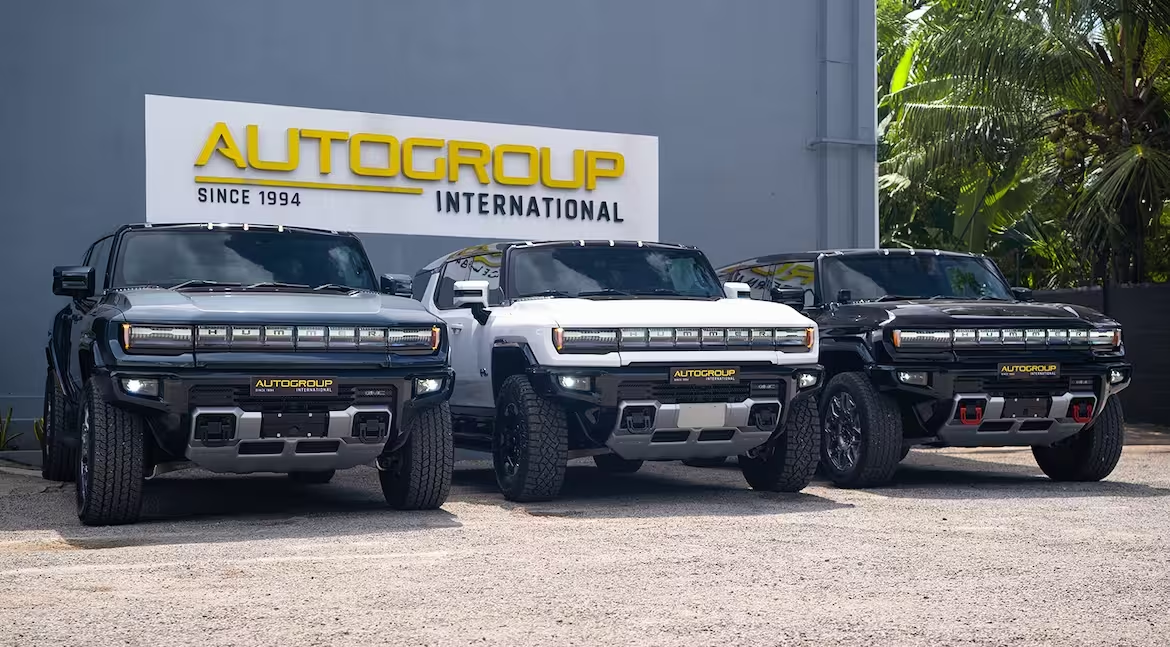
At Autogroup International we operate as a right hand drive remanufacturer. That means vehicle sourcing, controlled production, documented engineering, and dedicated teams behind warranty and support: procurement and supplier management, international logistics, quality assurance and ISO systems, engineering and manufacturing teams, and parts warehousing and distribution.
Those functions are not extras. They are what keeps owners on the road.
Conversion quality and factory backing concerns, addressed properly
Online you will see two consistent themes: scepticism about conversion quality and concern about lack of factory backing once a vehicle is exported.
The practical response is proof. Controlled engineering, audited quality systems, parts capability, and a defined support model are what create confidence, because they are measurable and repeatable.
Summary choose accountability first, then warranty terms
Choose the structure that removes the blame chain. Owners are best protected when one organisation is clearly responsible for engineering, manufacturing, parts, approvals, and long-term support.
Buyers Takeaway
Australia is one of the toughest real-world markets for right-hand drive American pickup trucks, making it a benchmark for understanding a universal truth: warranty is not just wording—it’s an operating system. The critical factor is accountability. Buyers must know who sourced the truck, who engineered it, who performed the right-hand drive conversion, who holds parts, and who is responsible when support is needed. Without that clarity, owners risk managing a chain of third parties, a problem that exists globally. Before buying, confirm the legal warranty provider, conversion ownership, engineering documentation, parts capability, technical escalation, approvals and payments, and continuity if the seller changes direction. Scale, audited systems, and defined processes—covering production, quality control, logistics, and support—make the difference between frustration and reliable service. Owners are best protected when a single organisation is accountable for engineering, manufacturing, parts, repairs, and long-term support, ensuring downtime is minimised and confidence is built through measurable, repeatable systems.
FAQs
Because warranty claims often relate to conversion components, diagnostics, and integration versus the actual original American pickup truck. If responsibility is split, outcomes can be slower and more complex.
Ask who the legal warranty provider is, who did the conversion work, and where parts are held.
Because experience can refer to individuals rather than the operating history of the current legal entity. Buyers should confirm continuity.
Yes. Audited systems create repeatable manufacturing outcomes and traceability, which matters for manufacturing and long-term support. All original manufacturers run similar systems (ISO 9001:2015 and others) and therefore so should the company doing the actual right hand drive conversion. These should however be validated (ask for an official certificate or check online) as many have ‘marketing claims’ relating to quality systems but do not have the actual quality system in operation.
A process that allows a workshop to access specialist guidance when a fault requires deeper engineering input. With Autogroup International this is always the same team – not having to reply on multiple different parties/
Parts availability and logistics often determine downtime more than any other factor. If you require a standard OEM part or a specialist conversion part – you need to be able to get that part ASAP to ensure your vehicle is back on the road as quickly as possible.
Often yes, if the warranty provider has clear servicing guidance and supports workshops with parts and technical input.
Not always, but buyers must confirm accountability if the dealer outsources the conversion and support chain. A core benefit of working with Autogroup International is that you are buying directly from the manufacturer.
Warranty terms, service guidance, and support contacts, plus evidence of controlled manufacturing where appropriate.
The same way: confirm the legal entity, conversion responsibility, parts capability, escalation pathway, approvals process, and continuity.